
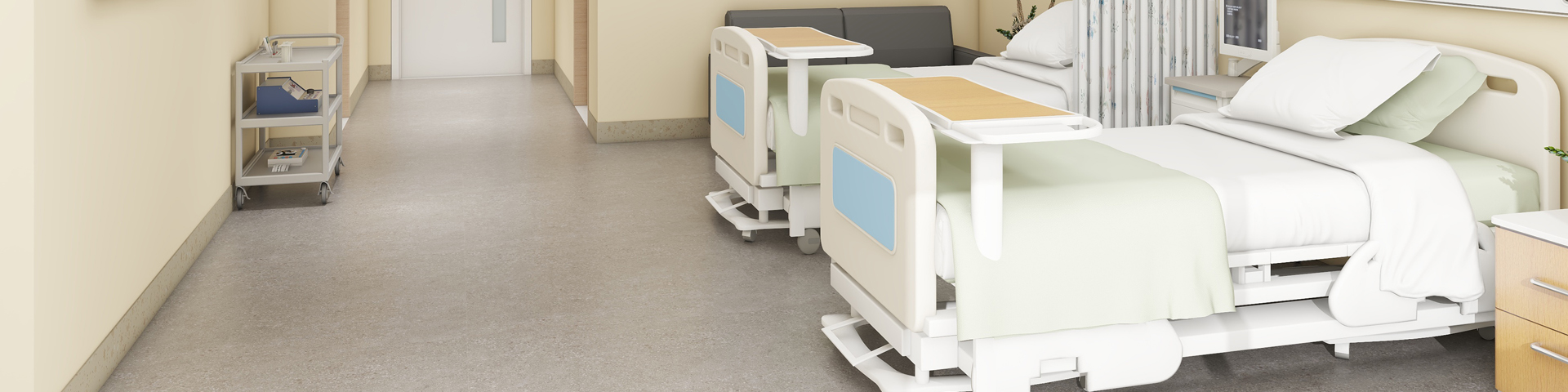
Within a healthcare setting, mealtime is more than a routine—it is a critical component of patient recovery, morale, and overall well-being. The Hospital Mobile Dining Table has emerged as an indispensable tool to support this vital activity. Far more than a simple tray, it is a versatile, ergonomic piece of Medical Furniture designed to bring the dining surface directly to the patient, wherever they are. This article explores the significant advantages of Mobile Patient Tables and illustrates their diverse applications across various Hospital Layouts.
1. Defining the Modern Mobile Dining Table
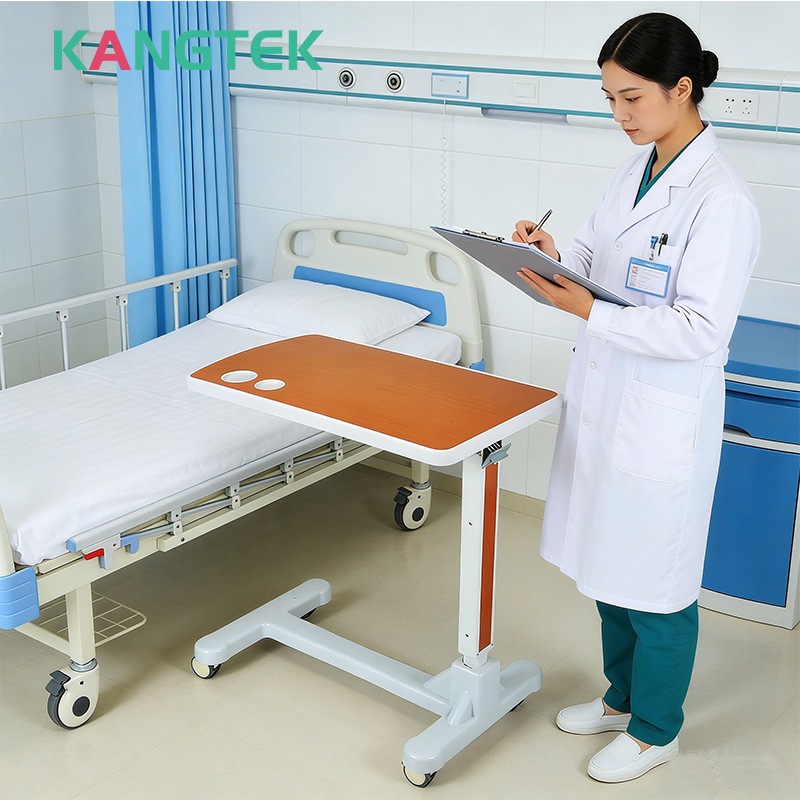
A Mobile Dining Table for healthcare is a movable, height-adjustable table specifically designed to safely and comfortably serve meals to patients in beds, chairs, or wheelchairs. Often referred to as a Hospital Overbed Table, Patient Bed Table on Wheels, or Medical Trolley Table, its core function is to provide a stable, sanitary surface for eating, drinking, reading, and other personal activities. It is a key component of Patient-Centric Care Furniture that promotes autonomy and dignity.
2. Key Advantages of Mobile Dining Tables
Promoting Patient Independence and Psychological Well-being
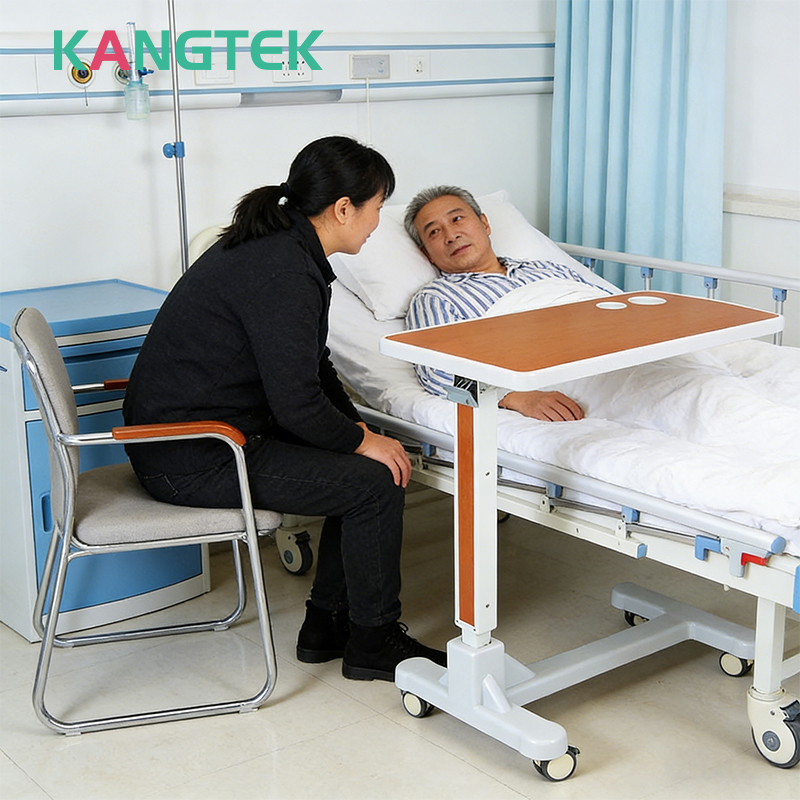
A Mobile Meal Table empowers patients. By allowing them to dine at their own pace in a comfortable position—whether in bed or seated in a Patient Armchair—it fosters a sense of normalcy and control. This empowerment is crucial for mental well-being and can positively influence appetite and recovery outcomes, making it a vital tool for Rehabilitation Support.
Unparalleled Flexibility and Space Optimization
The primary advantage is Mobility. Rolling Hospital Tables can be easily moved between patients and stored compactly when not in use, maximizing floor space. This flexibility is essential in dynamic environments like multi-bed wards, day rooms, or rehab gyms, allowing for quick reconfiguration based on daily needs—a perfect example of Adaptable Ward Furniture.
Enhancing Clinical Hygiene and Infection Control
Designed for the clinical environment, these tables feature Easy-Clean Surfaces, typically made of Seamless Laminate or Antimicrobial Top materials. Their smooth, non-porous finishes withstand frequent disinfection with hospital-grade cleaners. The mobility also prevents tables from becoming permanent fixtures that are difficult to clean around, directly supporting Hospital Hygiene Protocols.
Ergonomic Design for Safety and Comfort
Safety is engineered into every detail. Features include Locking Casters for stability during use, Height-Adjustable Mechanisms (often gas-spring assisted) for easy positioning, and Rounded Corners to prevent injury. An Adjustable Tilt Tabletop can aid patients with limited mobility. This Ergonomic Medical Furniture design protects both patients and staff.
Supporting Diverse Therapeutic and Social Activities
Beyond mealtime, a Multi-Purpose Medical Cart Table serves as a platform for occupational therapy, a writing desk, or a place for games and social interaction. This versatility extends its utility throughout the day, contributing to a more engaging and therapeutic environment.
3. Multi-Layout Applications Across Healthcare Facilities
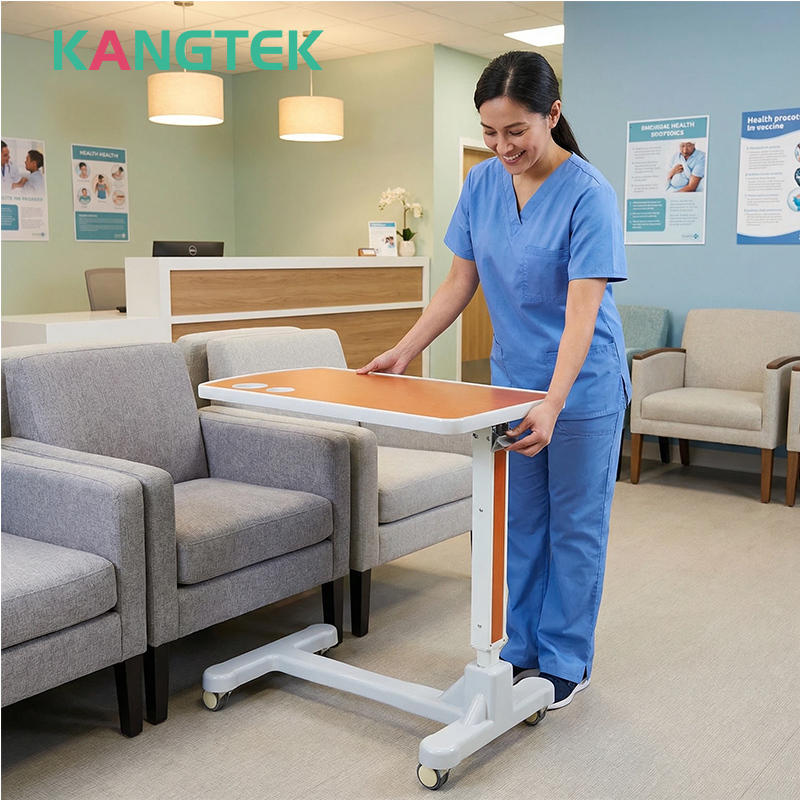
The design of Mobile Healthcare Tables allows for seamless integration into various departmental layouts, each with specific keywords highlighting their use.
General Inpatient Wards & Private Rooms:
Here, the classic Bedside Table on Casters or Overbed Table is standard. It is used by individual patients for meals and personal activities. A Nursing Ward Utility Cart with a flat top may also be repurposed for group dining in a day room.
Layout Keywords: Patient Room Dining Setup, Bedside Meal Service Cart, Ward Mobile Serving Table.
Rehabilitation Centers & Physiotherapy Gyms:
In these spaces, tables facilitate retraining in daily living activities. Height-Adjustable Tables are used by patients in wheelchairs or specialized seating to practice eating independently.
Layout Keywords: Rehab Dining Station, Therapy Gym Mobile Table, Adjustable Rehabilitation Workstation.
Cafeterias & Communal Dining Areas for Patients:
Mobile tables create flexible dining arrangements. They can be clustered for group meals or placed individually, supporting social dining programs that encourage mobility and community among patients.
Layout Keywords: Hospital Cafeteria Flexible Seating, Communal Dining Trolley Table, Patient Bistro Mobile Table.
Geriatric & Long-Term Care Facilities:
Stability and ease of use are paramount. Tables with very simple height adjustments, large wheel locks, and perhaps built-in side rails (Geriatric Dining Carts) are used to safely serve residents in lounges or at their bedside.
Layout Keywords: Elderly Care Meal Trolley, Long-Term Care Mobile Table, Dementia-Friendly Dining Cart.
Staff Break Rooms & On-Ward Nourishment Stations:
Sturdy Mobile Utility Tables are also used by staff to create impromptu workstations for charting or as a portable surface for preparing patient snacks and nutritional supplements near the point of care.
Layout Keywords: Staff Utility Cart, Mobile Nourishment Station, Clinical Workstation on Wheels.
4. Procurement Considerations: Choosing the Right Table
When selecting a Hospital Mobile Dining Table, key factors include:
Load Capacity & Stability: Must be robust enough for a full meal tray.
Adjustment Range: The height range should accommodate low beds, high chairs, and wheelchairs.
Maneuverability & Locking: Casters should roll smoothly on different flooring and lock securely.
Ease of Cleaning: A seamless, non-absorbent top is non-negotiable.
Additional Features: Consider options like a Tilting Top, Integrated Drawer, or Removable Tray for specialized needs.
